
Moving to Miami: The Complete 2026 Guide (Neighborhoods, Costs, Logistics)

Relocating to Miami allows you to experience great weather, nice beaches, interesting culture, and varied communities. But moving to Miami isn’t just about hiring a moving truck.
It also involves choosing a suitable community, understanding cost of living issues, making transportation arrangements, and dealing with other practical aspects of moving. Whether you’re moving to Miami from another state or within Florida, this guide covers everything you need to know.
Key Takeaways
- Select the neighborhood wisely: Think about your finances, your daily commute, your way of life, and your ability to get to basic services.
- Think about your budget: Think about housing, utilities, transportation, moving, and insurance.
- Book the movers in advance: This will help you secure a suitable moving date and deal with the building rules.
- Consider Miami’s climate: The heat, humidity, and the risk of rain and hurricanes can impact your move.
- Plan your relocation process: This will make moving day easier.
1. Investigate Miami’s Top Neighborhoods
The choice of where you will settle is one of the most critical choices. The reason is that each neighborhood has something special and unique in terms of the houses and lifestyle in Miami. Below are some of the best neighborhoods in Miami that you should consider.
Brickell: Best for Professionals
The Brickell neighborhood is best known for having high-rise apartments, many dining spots, and nightclubs, and is also close to the central business district. The neighborhood is ideal for professionals. Unfortunately, rents and parking in this neighborhood may be costly.
Coral Gables: Best for Families
The Coral Gables area has tree-lined streets, architecture based on the Mediterranean, parks, and a residential environment. It is suitable for families and professional people looking for something less noisy but still close to the downtown Miami.
Coconut Grove: Best for a Relaxing Environment
Coconut Grove provides lots of greenery, waterfront activities, outdoor spaces, and local shopping areas. This is a good place for individuals preferring a relaxing environment despite quite expensive housing options.
Miami Beach: Best for Coastal Lifestyle
Miami Beach has beach access, entertainment venues, restaurants, and specific neighborhoods. When choosing an apartment or condo in Miami Beach, take into account factors such as parking space and distance to reach your office.
Doral: Convenient Suburban Living
There are residential neighborhoods, shopping facilities, and proximity to roads and job opportunities. Doral can be a good choice if you favor a suburban setting or want to have easy access to Miami International Airport.
Recommendation: Do a comparative analysis between different areas with respect to rental costs, commuting time, parking facilities, and building limitations. If you are moving into Doral or another surrounding area, make sure you know about various moving services.
2. Being Familiar With the Cost of Moving
Your relocation budget should include moving your belongings and the ongoing cost of living.
Accommodation and Daily Expenses
Accommodation will probably be the biggest expenditure. This cost depends on location, property size, building facilities, and its proximity to work locations. Do not forget to account for:
- Monthly rental payment or home mortgage installment
- Deposit and application fee
- Electricity, water, Internet, and other utility service charges
- Groceries, dining, and household supplies
- Car loan installments, gas, parking fees, and transportation costs
- Insurance costs for your home/renter insurance
It should be noted that there is no income tax in Florida, yet that does not mean that staying in Miami is cost-effective.
Moving Service Cost
Charges for movers depend on the home size, distance, number of movers to hire, packaging needs, accessibility, and need for storage facilities. Hourly moving services might be a good fit for small, local moves. Fixed rate packages might be helpful if you know how extensive your move will be.
Other services like full packaging, unpacking, specialty items handling, and temporary storage might influence the final quote that you receive. To stay on top of all possible charges, obtain an estimate of the total price and check for the services included. Compare other services offered by movers in case of a local move.
3. Plan Moving Logistics
After you have chosen your neighborhood and set your budget, it is time to arrange your move.
Inquire About Building Specifications
If you live in an apartment building or a condominium, contact the building management before your move. They may require you to reserve an elevator, provide insurance certificates, specify a loading area, or even schedule certain hours for your move. Plan these aspects ahead of time to prevent problems.
Choose Your Moving Service
Book your moving service after you settle into your home. Inform them of the exact list of your belongings, whether there are stairs or elevators involved, and even tell them about large and delicate objects. It can also help if you need additional services along with transportation services.
Prepare for Miami Weather
It is also true that South Florida can be quite hot and humid. Plan the physical activity around loading and unloading wisely, drink plenty of water, and take care to protect valuable items from humidity. In hurricane season, watch the weather forecast and have an emergency plan ready in case severe weather affects your moving schedule.
Utility and Transportation Planning
Ensure that utilities are switched on and internet services are installed prior to arrival. In case you need to transport a car, make sure there is a place for parking at both addresses.
4. Moving Timeline Is A Must
Being realistic about your schedule ensures that you have ample time to handle all the logistics without having to rush through at the last moment.
- Eight to four weeks before move: Secure your housing situation, finalize the cost estimates of the move, set the date for the move, and start organizing.
- Four to two weeks before move: Book your movers and any other related services like packing services. Buy moving supplies and inform utility providers.
- One week before move: Arrange for building access, elevator, parking, and moving date logistics. Pack anything nonessential and label boxes.
- One day before move: Keep all vital information, medicines, chargers, valuable items, and toiletries handy. Confirm arrival times and check your moving list.
- Moving day: Ensure walkways are cleared and follow the moving inventory.
Final Thoughts
After combining careful budgeting, neighborhood research, and a proper moving plan, it will be easier to relocate in Miami. From selecting the best property to coordinating building access, without the above steps, a smoother relocation may not be possible.
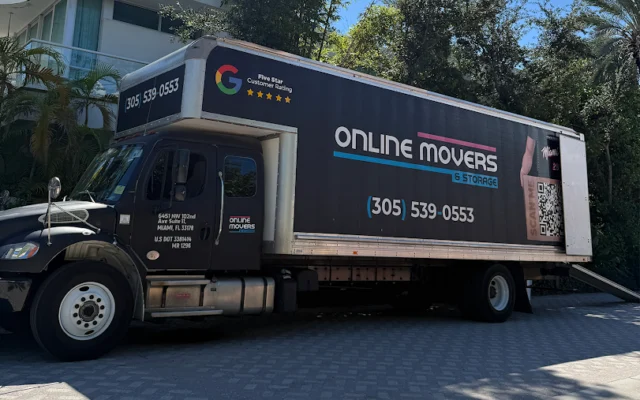
Whether for moving locally or over long distances, packing and storage purposes, or other services related to moving, Online Movers & Storage is there. The company helps you plan your relocation according to your preferences. Get an online moving quote from their official website.
Frequently Asked Questions
1. What is the cost of moving to Miami?
The cost depends on home size, location, parking, and other factors. When it comes to local moves, they are priced hourly, whereas flat-rate estimates are meant for distanced relocations. Ask for a detailed quote to become familiar with your expected expenses.
2. When can someone relocate to Miami?
You can relocate to Miami based on your schedule and budget. Besides that, you also need to see whether you can adjust to the weather in Miami. The winter months make relocating more comfortable, whereas relocating in the summer season can be difficult, as it requires additional preparation for humidity and heat.
3. Do I need to consider hiring professionals for moving to Miami?
Hiring professionals can make moving to a new city much easier because they will help with loading and unloading, transporting, and protecting furniture. Based on your preferences, you may also find packing, unpacking, disassembling furniture, and storing beneficial for you.
4. How far ahead of time should I schedule movers in Miami?
It is best to schedule your movers at least a few weeks ahead of time. It happens especially if you are going to move during a high season or with a larger family.
5. Are there any additional costs to budget?
Additional costs such as rent, internet service, parking, insurance, transportation, and household necessities are a few factors to budget for. Therefore, you need to budget accordingly.
Keep reading

Moving to Miami: Everything You Need to Know (2026 Guide)
Moving to Miami means higher rent, no state income tax, year-round sun and a very bilingual lifestyle. Here is our local guide to neighborhoods,…
15 Questions to Ask Movers Before You Hire in Miami (+ Red Flags)
When it comes to shifting to a new property, it can be stressful, but it can also be an exciting moment. However, it can…