
25 Packing Tips for Moving Like a Pro (From Professional Movers)
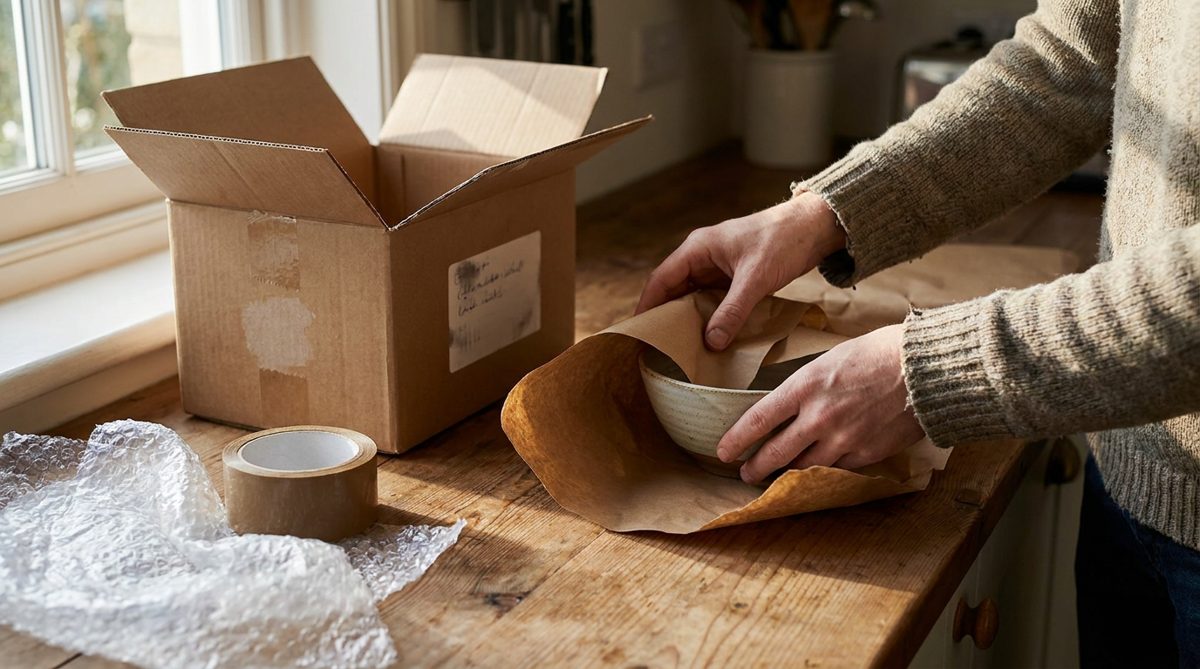
Short answer: the best packing tips for moving come down to four habits: start early with the rooms you rarely use, put heavy items in small boxes, label every box by room and contents, and keep an open-first box with your daily essentials. Do those four things and the rest of your move gets much easier.
We’ve packed and moved homes and offices across Miami-Dade, Broward and Palm Beach for over 25 years. Below are 25 moving packing tips we use on real jobs, plus a simple packing checklist for moving and a few Florida-specific rules that most guides skip.
Packing Tips for Moving: Supplies and Game Plan
Before you wrap a single plate, get your supplies together. Running out of tape halfway through a room is the most common reason packing drags on. Here is what most homes need:
- Small, medium and large moving boxes (plus a few dish-pack or double-wall boxes)
- Wardrobe boxes for hanging clothes
- Packing paper (unprinted newsprint is best) and bubble wrap
- Heavy-duty packing tape and a tape gun
- Mattress bags and furniture blankets
- Permanent markers and colored labels or stickers
- Zip bags for screws and small parts
- Stretch wrap for drawers and loose items
- Start early with rarely used rooms. Begin 4 to 6 weeks out with the garage, guest room, storage closet and off-season items. You won’t miss them, and you’ll build momentum before the daily-use rooms.
- Declutter before you pack. Every item you donate or toss is one less box to wrap, carry and pay to move.
- Buy proper moving boxes. Grocery-store boxes are often weak, damp or pest-prone. Uniform boxes stack better in the truck and protect your belongings.
- Pack one room at a time. Finish a room completely before starting the next. Mixed-up half-packed rooms are how things get lost.
- Take furniture apart early. Bed frames, shelves and tables go faster when they’re already disassembled. See when and how to disassemble furniture before moving, and bag every screw, taped to the piece it belongs to.
How to Pack for a Move: Box Sizing and Labeling
If you only remember one rule about how to pack for a move, make it this: heavy items go in small boxes, light items go in large boxes. A large box of books is a back injury waiting to happen.
- Heavy items in small boxes. Books, canned food, tools and records belong in small boxes you can lift comfortably.
- Light items in large boxes. Pillows, lampshades, linens and toys fit in larger boxes without making them too heavy.
- Tape the bottom well and fill the gaps. Tape the bottom seam in an H pattern, then fill empty space with paper so nothing shifts. Boxes should close flat, not bulge.
- Label by room + contents + color. Write the destination room and a short contents line (“Kitchen: baking pans”), then add a colored sticker for each room. Our crews can unload a whole house faster when colors match the doorways.
- Label the sides, not the top. Boxes get stacked, so a label on top disappears. Mark at least two sides and number each box if you want an inventory.
How to Pack Fragile Items and Electronics
- Pack dishes vertically. Plates are strongest on their edge. Wrap each one in paper, stand them like records in a dish-pack box, and add padding on the bottom and top.
- Protect glasses and stemware. Stuff the inside of each glass with paper, wrap the outside, and place the heaviest at the bottom. Mark the box “Fragile” on several sides.
- Use the original TV box if you have it. If not, buy a flat-screen TV box. Never lay a TV flat or stack things on top of it.
- Photograph your cables. Take a photo of the back of your TV, console or router before unplugging. Label each cable with tape, then bundle them with the device. Setup on the other end takes minutes instead of an hour.
- Handle mirrors and artwork carefully. Tape an X on glass, wrap in paper and bubble wrap, and ship on edge in a mirror box. Never lay them flat.
- Leave pianos to the pros. Pianos are heavy, awkward and easy to damage. Read what you need to know before you book piano moving in Miami.
Clothes, Mattresses and Bedrooms
- Use wardrobe boxes for hanging clothes. Move clothes straight from the closet to the box with no folding and no wrinkles. They’re also the fastest way to unpack.
- Bag your mattress. A mattress bag keeps out dust, dirt and moisture. It matters even more in Miami’s humidity and sudden rain.
- Use soft items as padding. Towels, sweaters and bedding make free cushioning for fragile items. Just keep them clean and dry.
Open-First Box and What NOT to Pack
- Pack an open-first box. Include toilet paper, phone chargers, basic tools, scissors, a shower curtain, towels, medications, pet food, coffee and a few plates and utensils. Keep it in your car, not on the truck.
- Don’t pack hazardous items. Movers can’t safely transport propane tanks, gasoline, paint, aerosols, bleach, pool chemicals, fireworks or ammunition. Dispose of them properly or move them yourself where the law allows.
- Keep valuables and documents with you. Passports, birth certificates, medical records, jewelry, laptops, checkbooks and keys travel with you, not in a box.
Florida-Specific Packing Tips
Packing in South Florida isn’t the same as packing in Ohio. Heat, humidity and sudden rain change a few things.
- Don’t seal damp items. Towels, shoes, gym bags and anything that hasn’t fully dried can grow mildew inside a closed box. Dry everything first, and let the fridge, freezer and washer air out for a day with the doors open.
- Protect electronics from heat. A truck, garage or storage unit can get very hot in the Miami summer. Keep laptops, hard drives, candles, vinyl records and anything heat-sensitive in your air-conditioned car.
- Plan for rain. Afternoon storms can pop up fast, and hurricane season runs June 1 to November 30. Use sturdy boxes, plastic bins for important items, and furniture covers so a short walk to the truck doesn’t ruin your things.
Packing Checklist for Moving: A Simple Timeline
- 4 to 6 weeks out: declutter, order supplies, start packing rarely used rooms.
- 2 to 3 weeks out: pack books, décor, off-season clothes and extra kitchenware. Photograph electronics.
- 1 week out: pack most of the kitchen, bathroom basics and closets. Disassemble furniture.
- 2 to 3 days out: empty and dry the fridge and washer, pack the open-first box, set aside valuables and documents.
- Moving day: do a final walk-through of every room, closet and cabinet, and confirm the access details for both buildings.
Should You Hire a Professional Packing Service?
Packing yourself saves money, but it takes longer than most people expect. Professional packing makes sense if you’re short on time, moving a large home, shipping fragile items or moving out of state. Our crews bring the materials and know how to pack for transit.
Full packing typically adds $200–$500 for an average home. See our breakdown of how much movers cost in 2026. Many customers pack the easy rooms themselves and leave the kitchen and fragile items to us. Not sure whether you need help? Check the signs you need professional movers.
If you’re moving out of state, weight drives your price, so packing smart and shipping less matters even more. Our guide to planning a cross-country move covers the full timeline.
Frequently Asked Questions
How far in advance should I start packing for a move?
Start 4 to 6 weeks before moving day for an average home, beginning with rooms you rarely use. Smaller apartments may need only 2 to 3 weeks. A larger home or a lot of belongings needs more lead time.
What is the best order to pack a house?
Work from least-used to most-used: garage, storage and guest rooms first, then living areas, bedrooms, the kitchen and finally the bathroom. Keep the open-first box and daily essentials for last.
Can I pack everything in one day?
A studio or 1-bedroom sometimes can be packed in a day or two, but larger homes usually can’t. If you’re truly short on time, a packing crew can do it for you. See our guide to finding reliable same day movers for last-minute moves.
What should I not pack when moving?
Don’t pack hazardous materials (propane, gasoline, paint, aerosols, pool chemicals), perishable food, and anything irreplaceable such as documents, jewelry, medications and electronics you rely on. Carry those with you.
Get Your Free Moving Quote in 15 Minutes
Online Movers & Storage offers free, binding quotes for local and long-distance moves across South Florida, with packing services, storage and furniture disassembly available. Call 305-539-0553 or fill out our quick form, and a specialist will get back to you within 15 minutes.
Keep reading
Moving From California to Florida: 2026 Relocation Guide
Moving from California to Florida typically costs $3,500–$7,000 for a 2–3 bedroom home and takes roughly 1–2 weeks in transit. Here is what to…
Moving Out of State Checklist: 40 Things to Do Before You Go
Our moving out of state checklist breaks an interstate move into 40 clear tasks, from vetting movers to getting a new driver license. It…

Moving from New York to Florida: Costs, Tips & Timeline (2026)
Moving from New York to Florida typically costs $2,500–$5,000 for a 2–3 bedroom home. Here is what drives the price, how long it takes,…