
Tips for Moving with a Cat: 15 Ways to Keep Kitty Calm
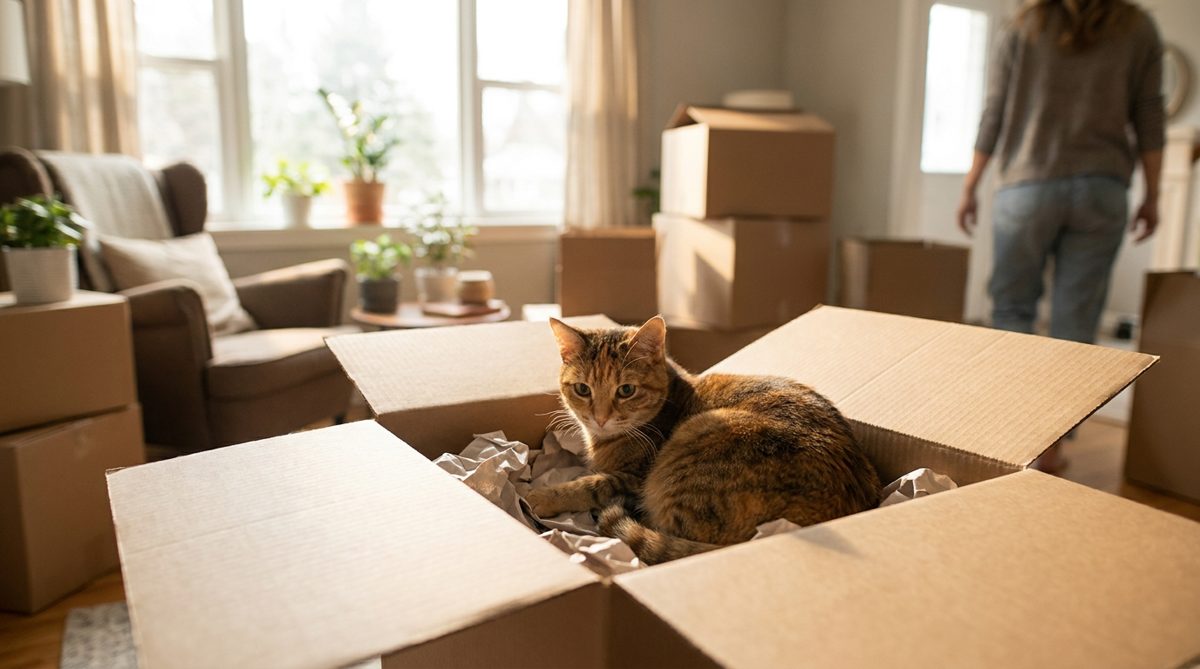
Short answer: the best tips for moving with a cat are to get your cat used to the carrier early, keep its routine steady while you pack, keep it in a closed room on moving day, and carry it in your own car (never in the moving truck). At the new home, start with one quiet safe room and let your cat explore slowly.
We’ve been moving families across Miami-Dade, Broward and Palm Beach for over 25 years, and many of those families have cats. Here is how to move with a cat in 15 simple steps, plus what to tell your movers and how to handle Florida’s heat.
Tips for Moving with a Cat: Before the Move
Cats love routine and familiar smells. Moving breaks both, so the goal is to prepare early and change as little as possible. Start 2–3 weeks before moving day if you can.
1. Start carrier training early
Leave the carrier open in a room your cat likes. Put a blanket or a worn T-shirt inside, add treats, and let your cat walk in and out on its own terms. Once it’s comfortable, close the door for a minute or two, then build up slowly. A cat that sees the carrier as a safe spot is much easier to transport.
2. Choose the right carrier
Pick a sturdy carrier with secure latches and good ventilation, big enough for your cat to stand and turn around. Hard-sided carriers are easy to buckle into a car seat. If you plan to fly, check your airline’s carrier size rules before you buy.
3. Schedule a vet visit
Book a checkup before the move. Ask for a copy of your cat’s medical and vaccination records, and request refills of any regular medication. If you’re moving out of state or flying, ask whether you need a health certificate. Requirements vary by state and airline, so confirm them early.
4. Update the microchip and ID tag
A new home means new doors, new smells and a higher chance of escape. Update your address and phone number with your microchip registry, and make sure your cat wears a collar with a tag showing your current phone number. Take a few clear photos of your cat in case you need them.
5. Ask your vet about calming options
Some cats handle a move fine, and others struggle. If yours is anxious, talk to your veterinarian about what might help, such as calming products or other options. Don’t give your cat any supplement or medication without your vet’s advice, since every cat is different.
6. Pick a quieter moving date
Fewer people, shorter loading times and less noise are all easier on a cat. Mid-week moves are usually 15–20% cheaper than weekends, and they tend to be calmer, too. See the best times to move locally in Miami and our tips for moving during peak season if your date is fixed.
Packing Days: Keep Your Cat’s Routine Steady
Boxes, tape and strangers walking in and out can stress a cat. These steps keep the chaos to a minimum.
7. Keep feeding and play times the same
Feed, play and clean the litter box at the usual times, even on the busiest packing day. Predictable routines tell your cat that everything is still okay.
8. Introduce boxes gradually
Cats are curious. Leave a few empty boxes out early so your cat can sniff and explore them. Pack one room at a time, and keep a few familiar items (a favorite blanket, a scratching post, a toy) out until the very end.
9. Create a quiet room
Choose one room, ideally the one you’ll pack last, as your cat’s retreat. Put food, water, a litter box, a bed and toys inside. Keep the door closed whenever people are packing or carrying things out. Boxes sealed with tape can look like a hiding spot, so check inside before you close them.
How to Move with a Cat on Moving Day
Moving day is the highest-risk day for escapes. Open doors, loud voices and a truck in the driveway are a lot for a cat. This is the plan we recommend.
10. Put your cat in a closed bathroom with a sign
A bathroom works well because it’s small, easy to clean and usually has nothing your cat can hide behind. Before the movers arrive, set up food, water, a litter box and a comfortable bed inside. Then close the door and tape a clear sign on the outside, such as: “CAT INSIDE. DO NOT OPEN. Please knock and ask.”
11. Tell your movers about your pet
Mention your cat when you book and again when the crew arrives. Point out the closed room, ask them to keep that door shut and to close the front door behind them whenever they carry items out. A good crew will gladly work around it. If you’re still comparing companies, here’s how to choose the right moving company.
12. Pack the cat’s room last
Once everything else is on the truck, remove the cat’s belongings, load them last (or take them in your car) and clean the room. Then put your cat in the carrier, buckle it in and drive to the new home. Do this just before you leave to keep carrier time short.
13. Never transport your cat in the moving truck
A moving truck cargo area has no ventilation or temperature control, and it’s loud and unsafe for an animal. Your cat should always travel with you, in a carrier, in your car’s passenger area. This applies to every move, local or long-distance.
Florida Heat Warning: Never Leave Your Cat in a Car
A parked car in South Florida can become dangerously hot within minutes, even with the windows cracked and even in the shade. Never leave your cat alone in a car, not for a quick stop and not on moving day. Run the A/C before you load the carrier, keep the carrier out of direct sun, and plan stops so someone stays with your cat at all times.
If you’re moving during hurricane season (June 1 to November 30), keep your cat’s carrier, records, food and medication where you can grab them fast.
Long-Distance Moves: Road Trips and Flights
14. Plan your trip around your cat
If you’re driving, pack a “cat kit”: water, food, a travel litter box, paper towels, waste bags, a leash or harness, records and a favorite blanket. Keep the carrier buckled in, don’t open it while the car is moving, and book pet-friendly hotels in advance. Offer water at stops, but only open the carrier inside the car with all the doors and windows closed.
If you’re flying, check your airline’s pet policy early. Rules on cabin pets, carrier sizes, fees and documents differ by airline and can change, so confirm them directly. Plan your flight around your cat as well.
While you drive or fly, your movers handle everything else. For a bigger relocation, read our guide to planning a cross-country move. Typical long-distance prices for a 2–3 bedroom home are $2,000–$4,500 from Miami to Texas, $2,500–$5,000 to New York and $3,500–$7,000 to California. For more detail, see how much movers cost in 2026.
Settling In: Helping Your Cat Adjust to the New Home
15. Set up a safe room first
Before you unload anything else, prepare one small room with the litter box, food, water, bed, scratching post and toys. Carry your cat in, close the door, open the carrier and let it come out on its own. Sit nearby quietly for a bit, then leave your cat alone to settle.
Put the litter box in place first so your cat can find it right away. Keep it in the same type and brand of litter as before, and put it away from food and water.
Then open up the house gradually, one room at a time, over several days. Moving furniture around in the safe room can wait: familiar items and smells matter most. If the movers are still working, keep the door to the safe room closed and ask them to leave it alone. Furniture that was taken apart can be put together in the other rooms. See when and how to disassemble furniture before moving.
Keep your cat indoors for at least 2 weeks
Even if your cat went outside at the old house, keep it inside for at least two weeks after you move, and longer if it still seems unsure. A cat that gets out before it knows the new territory can easily get lost. Check windows, screens and balcony doors, and watch the front door whenever people go in and out.
Signs Your Cat Needs Extra Help
Some hiding, a smaller appetite and a bit of grumpiness are normal in the first days. Call your vet if your cat refuses to eat or drink for more than a day or so, stops using the litter box, hides constantly for a long time or shows any sign of illness. Always ask your vet before giving any medication.
Frequently Asked Questions
How do I move with a cat without stressing it out?
Start carrier training early, keep feeding and play times consistent, and keep your cat in a quiet, closed room on moving day. At the new home, begin with a single safe room and let your cat explore slowly. Ask your vet about calming options if your cat is very anxious.
Where should my cat be during the move?
Keep your cat in a closed bathroom or bedroom with a sign on the door while the movers load. When the truck is loaded, put your cat in its carrier and take it in your own car. Never put a cat in the moving truck.
How long does it take a cat to adjust to a new home?
It varies. Some cats relax in a few days, and others need a few weeks. Keep the routine steady, give your cat time in its safe room and don’t rush introductions to the rest of the house. Keep your cat indoors for at least two weeks.
Should I tell my movers I have a cat?
Yes. Tell them when you book and again when they arrive, point out the room where your cat is, and ask the crew to keep doors closed. Not sure if you need professional help for the rest of the move? Check the signs you need professional movers.
Get Your Free Moving Quote in 15 Minutes
Online Movers & Storage offers free, binding quotes for local and long-distance moves across South Florida, and we’ll plan the day around your pets. Call 305-539-0553 or fill out our quick form, and a specialist will get back to you within 15 minutes.
Keep reading

Moving From California to Florida: 2026 Relocation Guide
Moving from California to Florida typically costs $3,500–$7,000 for a 2–3 bedroom home and takes roughly 1–2 weeks in transit. Here is what to…

25 Packing Tips for Moving Like a Pro (From Professional Movers)
Packing smart saves time, money and broken dishes. Here are 25 packing tips for moving that our crews use every day, including Florida-specific advice…

Moving Out of State Checklist: 40 Things to Do Before You Go
Our moving out of state checklist breaks an interstate move into 40 clear tasks, from vetting movers to getting a new driver license. It…